Ligue contre le Cancer Researchers & Donors Meeting
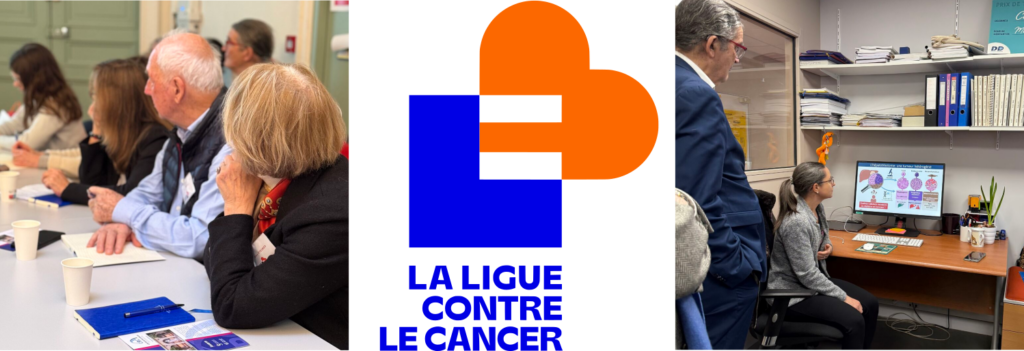
We welcomed the Ligue contre le cancer – Paris Committee and donors to discover the research projects they help fund.

The Visit

Director Jessica Zucman-Rossi opened the event, followed by Prof. Pierre Laurent-Puig discussing researcher-patient partnerships and Chiara Maiuri presenting our technology platforms.

Our PhD students and postdocs guided visitors through four research areas, notably Sandra Rebouissou for Pediatric cancers.

Making a Difference

These exchanges highlighted how donations directly support innovative research projects, early-career scientists, and cutting-edge equipment.

Thank you to the Ligue contre le cancer and all donors for your trust and commitment to advancing cancer research.
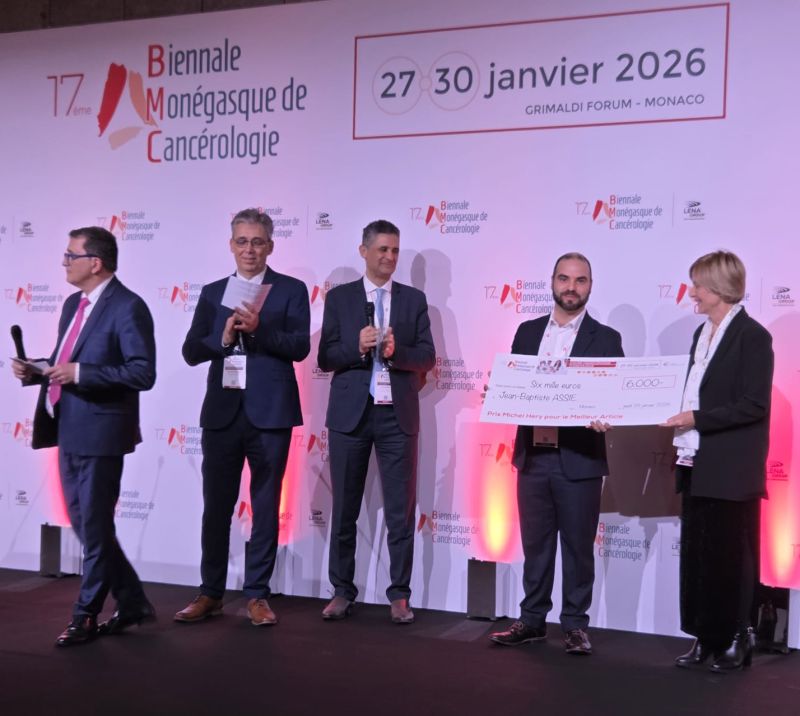
Jean-Baptiste Assié – Award of Prix Michel Hery

Jean-Baptiste Assié Receives Prix Michel Hery

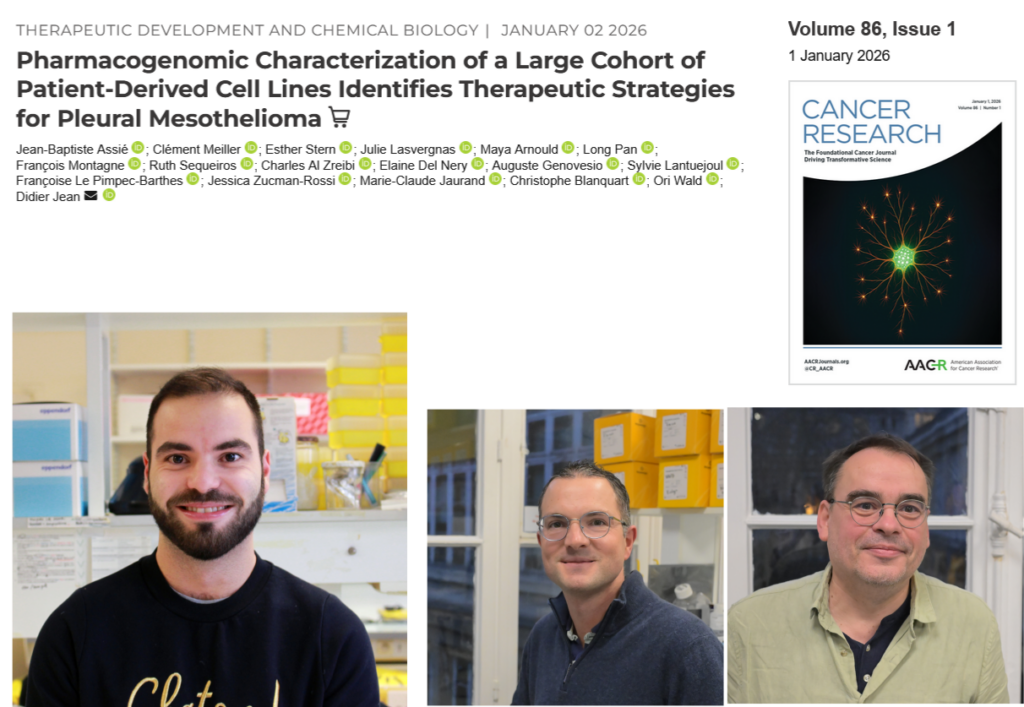
We’re proud to highlight Jean-Baptiste Assié from Didier Jean’s team at the Centre de Recherche des Cordeliers, recently awarded the Prix Michel Hery at the 17th Monaco Cancer Biennial (MonacoCancero) for his work on pleural mesothelioma pharmacogenomics.

Breakthrough Research

Published in Cancer Research (2025), the study used an integrated pharmacogenomics approach on a large patient cohort, combining multi-omics analyses and high-throughput drug screening in collaboration with Université Paris-Est Créteil, Université Paris Cité, and Centre Léon Bérard.

Key Findings

The research identified several therapeutic vulnerabilities and highlighted entinostat as a promising treatment option, particularly in combination with anti-PD-1 immunotherapy, opening pathways for future clinical trials.

This award recognizes the Centre de Recherche des Cordeliers’ commitment to cancer research, the strength of scientific collaboration, and the importance of translational research bridging fundamental science and clinical application to better stratify patients and identify new therapeutic strategies.

New publication, Jean-Baptiste Assié in Cancer Res.

Pleural mesothelioma (PM) urgently requires effective treatments. This study aimed to identify potential therapies using a drug repurposing strategy in the context of the molecular heterogeneity of PM. We performed a multiomics study of a large cohort of patient-derived primary PM cell lines (n = 58) and conducted a multistep pharmacologic study starting with a large-scale drug screen with 1,327 compounds using 11 cell lines to select drugs of interest. Integrated multiomics analysis demonstrated that the molecular landscape of the cell line cohort recapitulates the main findings in tumors and revealed important features of PM. Large-scale drug screening identified 233 active compounds belonging to recurrent therapeutic classes. Subsequent validation of 35 compounds highlighted a subset of 12 compounds performing better than standard chemotherapy, including entinostat and fluvastatin, with therapeutic activity related to molecular sarcomatoid phenotype, BAP1 mutation, and YAP/TAZ activity. Importantly, both compounds displayed the same efficacy in 2D and 3D culture models, and a single treatment with entinostat improved survival in an immunocompetent mouse model compared with fluvastatin and standard cisplatin–pemetrexed chemotherapy, which showed similar antitumor effects. Strikingly, entinostat improved the efficacy of immunotherapy based on anti-PD-1 antibody. Combination of entinostat with anti-PD-1 even eradicated tumors in several mice and immunized them against retransplantation of tumor cells. Overall, the drug sensitivity data provided by this study represent a resource to facilitate future clinical investigations to improve the treatment of PM.

Significance. Pharmacogenomic characterization of a cell line biobank provides a valuable resource on drug sensitivity in mesothelioma and identifies entinostat as a promising therapeutic option, particularly in combination with immune checkpoint inhibitors.

Hélène Péré – Award from Greater Paris University Hospitals – AP-HP

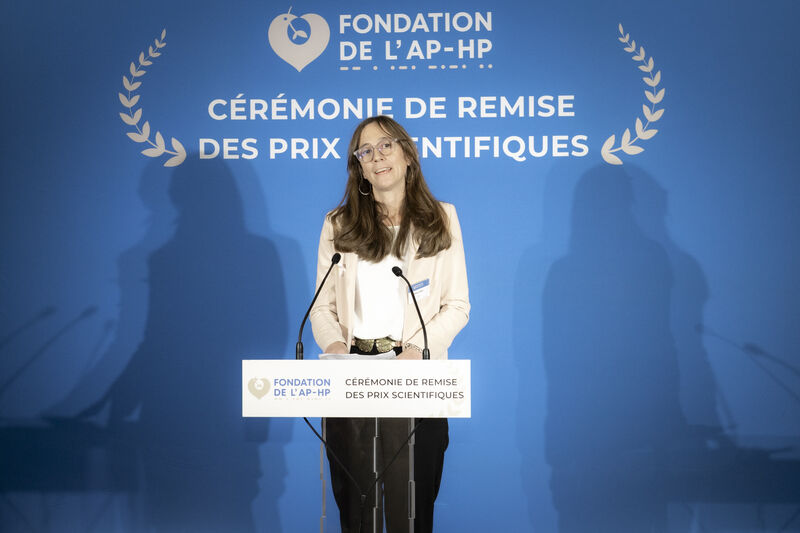
Congratulations to Professor Hélène Péré, 2025 Avenir Prize Winner!

The Centre de Recherche des Cordeliers is delighted to congratulate Professor Hélène Péré, recipient of the 2025 Avenir Prize from the Greater Paris University Hospitals Foundation – AP-HP!

This award recognizes her outstanding work on human papillomavirus-induced tumors, conducted within Professor Jessica Zucman-Rossi’s FUNGeST team. Her research on viral biomarkers opens new perspectives for diagnosing and managing (pre-)tumoral lesions, advancing translational research at the Centre de Recherche des Cordeliers.

Check out the interview here

Marianna CORNET – Award from the the french Academy of Surgery

Applied Fundamental Research in Surgery Prize – November 28, 2025

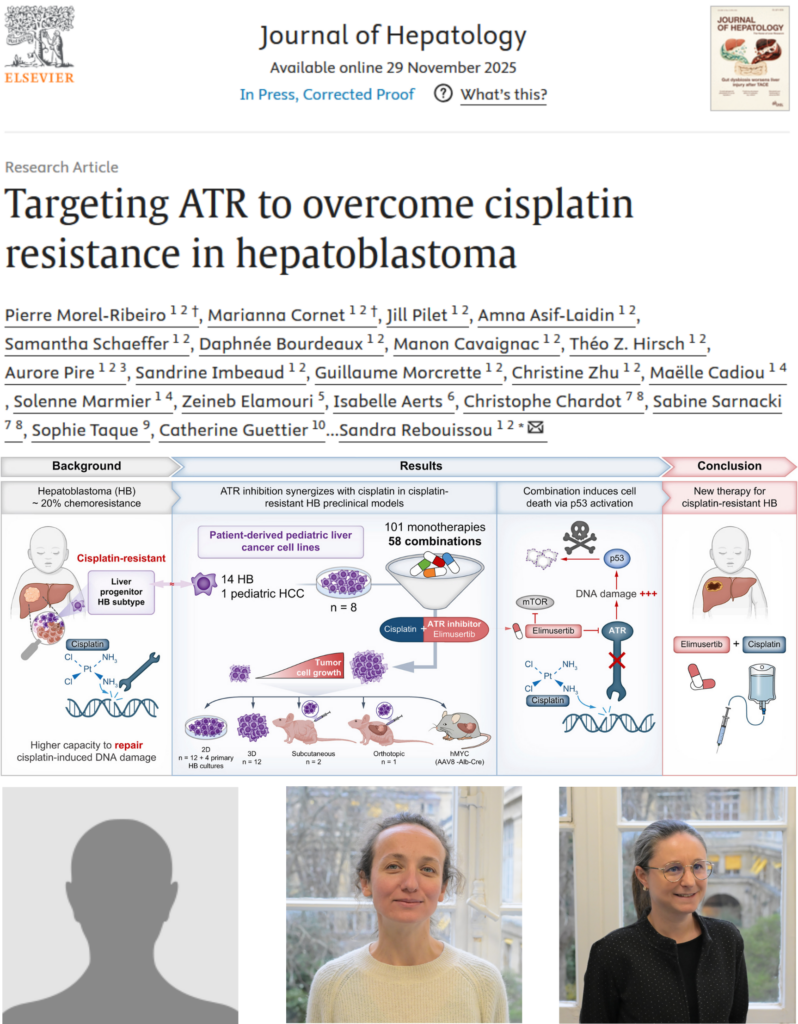
This awarded stands for her groundbreaking contribution to research on chemotherapy resistance in hepatoblastoma, the most common pediatric liver cancer. She contribitutes to identify that blocking ATR with the drug elimusertib, combined with cisplatin, significantly reduces tumor growth in cisplatin-resistant cases, offering a promising new treatment approach for children who don’t respond to standard therapy.
See the full article

Eligibility: Surgeons, interventional physicians, and anesthesiologists (for the Surgical Risk Prevention Prize only) under 40 years old in the year of application. Primarily targets surgeons completing their Master 2 year and those pursuing doctoral studies, though not exclusively.

Award Criteria: Recognizes the best laboratory research work. All aspects of surgical laboratory research are eligible, including biology, oncology, regenerative medicine, genetics, and more.

New publication, Pierre Morel-Ribeiro & Marianna Cornet, et al. in J. Hepatol.

Background & aims. Hepatoblastoma (HB) is the most common pediatric liver cancer. While standard cisplatin-based therapy cures ∼80% of patients, resistance remains a major challenge, with no standard second-line treatment. This study aimed to identify new therapeutic options for cisplatin-resistant HB.

Methods. Fourteen HB cell lines and one pediatric hepatocellular carcinoma cell line were molecularly profiled. Eight cell lines were screened with 101 compounds and 58 combinations in monolayer cultures. The most synergistic combination was further validated in two low-passage patient-derived primary HB cultures and 12 HB spheroid models. In vivo efficacy was evaluated in cisplatin-resistant subcutaneous (n = 2) and orthotopic (n = 1) HB xenografts, and a liver-specific MYC-driven HB-like model. Mechanistic analyses were performed using transcriptomics, DNA damage, and apoptosis assays.
Results. Cell lines recapitulated key HB genomic alterations and mainly represented the cisplatin-resistant liver progenitor transcriptomic subtype, characterized by upregulated DNA repair pathways, potentially contributing to chemoresistance. ATR was identified as a critical target for overcoming resistance. The potent ATR inhibitor elimusertib demonstrated strong synergy with cisplatin in 2D and 3D cultures. In vivo, the elimusertib/cisplatin combination significantly suppressed tumor growth in xenografts, with manageable toxicity, inducing tumor cell death through enhanced DNA damage and p53 activation. The combination also showed antitumor efficacy in the MYC-driven HB-like model, which mirrors the cisplatin resistance and DNA repair features of the human liver progenitor HB subtype. Additional in vitro studies suggested that elimusertib synergizes with other standard HB chemotherapies and inhibits mTOR.
Conclusions. ATR mediates cisplatin resistance in HB. The combination of elimusertib and cisplatin demonstrated preclinical efficacy across patient-derived cultures and multiple in vivo HB models, supporting its potential as a promising therapy for cisplatin-resistant HB.
Impact and implications. Chemoresistance significantly reduces survival in patients with hepatoblastoma, highlighting the need for new therapies. In this study, we found that blocking ATR with the drug elimusertib synergizes with cisplatin, strongly reducing tumor growth in diverse preclinical models, including cell cultures and mouse models of cisplatin-resistant hepatoblastoma. These results highlight a promising new approach to improve outcomes for children with cisplatin-resistant hepatoblastoma and support further clinical evaluation.