
New publication, Pierre Morel-Ribeiro & Marianna Cornet, et al. in J. Hepatol.
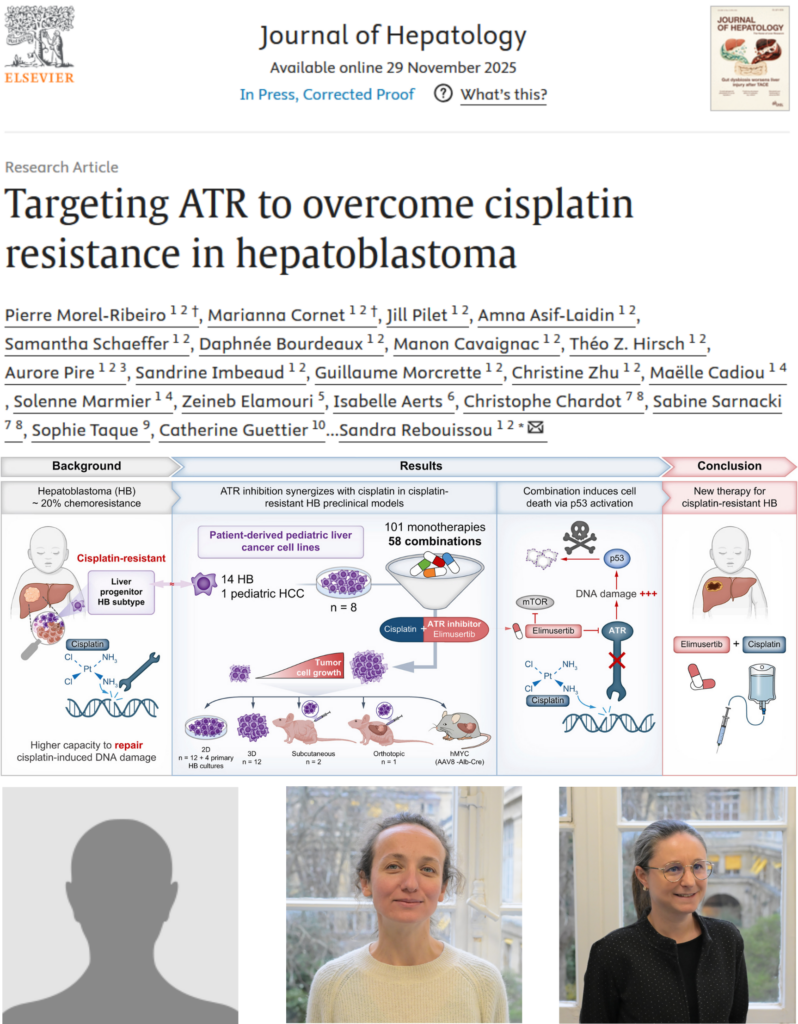
Background & aims. Hepatoblastoma (HB) is the most common pediatric liver cancer. While standard cisplatin-based therapy cures ∼80% of patients, resistance remains a major challenge, with no standard second-line treatment. This study aimed to identify new therapeutic options for cisplatin-resistant HB.
Methods. Fourteen HB cell lines and one pediatric hepatocellular carcinoma cell line were molecularly profiled. Eight cell lines were screened with 101 compounds and 58 combinations in monolayer cultures. The most synergistic combination was further validated in two low-passage patient-derived primary HB cultures and 12 HB spheroid models. In vivo efficacy was evaluated in cisplatin-resistant subcutaneous (n = 2) and orthotopic (n = 1) HB xenografts, and a liver-specific MYC-driven HB-like model. Mechanistic analyses were performed using transcriptomics, DNA damage, and apoptosis assays.
Results. Cell lines recapitulated key HB genomic alterations and mainly represented the cisplatin-resistant liver progenitor transcriptomic subtype, characterized by upregulated DNA repair pathways, potentially contributing to chemoresistance. ATR was identified as a critical target for overcoming resistance. The potent ATR inhibitor elimusertib demonstrated strong synergy with cisplatin in 2D and 3D cultures. In vivo, the elimusertib/cisplatin combination significantly suppressed tumor growth in xenografts, with manageable toxicity, inducing tumor cell death through enhanced DNA damage and p53 activation. The combination also showed antitumor efficacy in the MYC-driven HB-like model, which mirrors the cisplatin resistance and DNA repair features of the human liver progenitor HB subtype. Additional in vitro studies suggested that elimusertib synergizes with other standard HB chemotherapies and inhibits mTOR.
Conclusions. ATR mediates cisplatin resistance in HB. The combination of elimusertib and cisplatin demonstrated preclinical efficacy across patient-derived cultures and multiple in vivo HB models, supporting its potential as a promising therapy for cisplatin-resistant HB.
Impact and implications. Chemoresistance significantly reduces survival in patients with hepatoblastoma, highlighting the need for new therapies. In this study, we found that blocking ATR with the drug elimusertib synergizes with cisplatin, strongly reducing tumor growth in diverse preclinical models, including cell cultures and mouse models of cisplatin-resistant hepatoblastoma. These results highlight a promising new approach to improve outcomes for children with cisplatin-resistant hepatoblastoma and support further clinical evaluation.